More monounsaturated fat
Research on Wagyu cattle raised in Japan shows their fat is enriched in monounsaturated fatty acids, the family that includes oleic acid.1

Your cart is empty.
Subtotal
Shipping and taxes calculated at checkout.
The science
Not all beef fat is the same. Research on Wagyu cattle fat shows more monounsaturated fat and less stearic acid than fat from other breeds, which makes it softer. Here is what the studies say, with a link to each one.
Shop the Elixir $96.00
Not all tallow is equal. Wagyu fat is built different, backed by research.
It has more of the soft fats that melt easily, and less of the hard, waxy ones.123
What makes Wagyu different
Research on Wagyu cattle raised in Japan shows their fat is enriched in monounsaturated fatty acids, the family that includes oleic acid.1
In a Texas A&M study, oleic acid was higher in Wagyu than in Angus fat under the skin, while myristic and palmitic acid were higher in Angus.3
Wagyu fat had more CLA than Angus fat in a Texas A&M study.3
Research on fat from Japanese cattle, including Wagyu, found it soft to very soft, mainly because it is low in stearic acid and so melts at lower temperatures.4811
In one study of pasture-raised cattle, Wagyu fat melted at about 33°C, compared with 46.5°C for Angus.11
That's why Wagyu tallow feels softer and melts into your skin instead of sitting on top.
Scientists fed Wagyu-cross and Angus cattle the same diet for 552 days. The Wagyu fat still had more of the soft fats that melt easily.
What the research on cattle fat shows, category by category.
| Wagyu tallowFat from Wagyu cattle | Regular beef tallowFat from other breeds, e.g. Angus | |
|---|---|---|
| Soft fats (monounsaturated, incl. oleic acid) 123 | More of the soft fats that melt easily | Fewer soft fats |
| Hard, waxy fats (palmitic & stearic acid) 2 | Less of the hard, waxy fats | More hard, waxy fats |
| Feel of the fat 4 | Soft to very soft | Generally hard |
| Melting temperature 4 | Melts at a lower temperature, so it softens on contact | Needs more warmth to soften |
Less of the hard, waxy fats is why Wagyu tallow feels softer and melts into your skin instead of sitting on top.
Category comparisons from published research on cattle fat. Results vary with diet and age at harvest. This is not a lab test of any specific product.
Pasture-raised, then slowly finished.
Fatty acid content varies by batch, so we focus on the breed and the process.
Fat that melts at a lower temperature softens easily between your fingertips. The Elixir directions call for just a pea-sized amount.
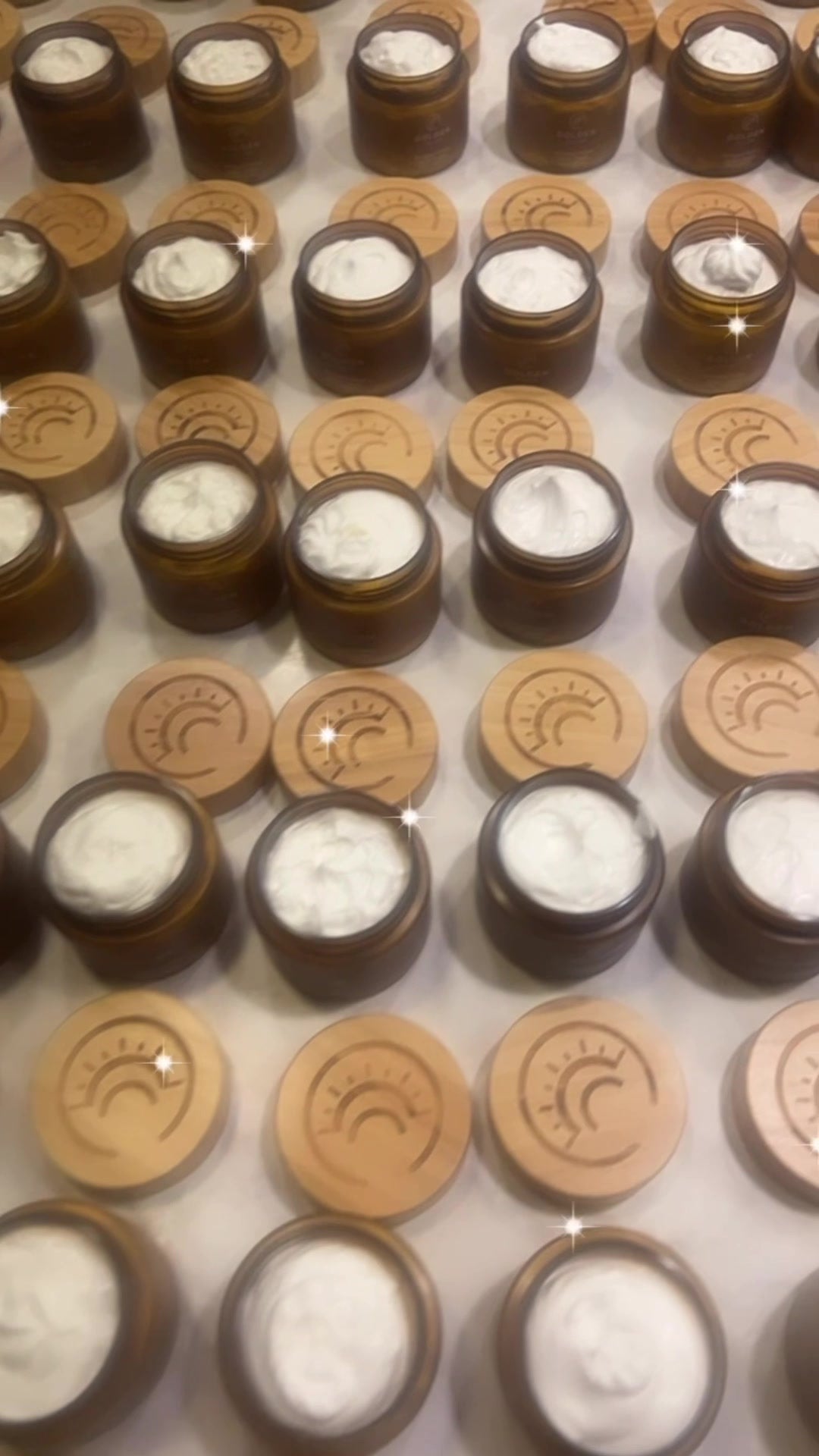
The Opulent Facial Elixir has a light, whipped texture that melts into your skin without grease.
Wagyu tallow, lavender essential oil and organic cold-pressed extra-virgin olive oil. Nothing else.
Try it
These studies describe cattle fat, not skin outcomes. Golden Tallow products are cosmetics and are not intended to diagnose, treat, cure or prevent any disease.